No products in the cart.
Return To Shop

No products in the cart.
Return To Shop
No products in the cart.
Return To Shop
Bridge to Global Literature
No products in the cart.
Return To Shop
Bridge to Global Literature
No products in the cart.
Return To Shop

₹699.00
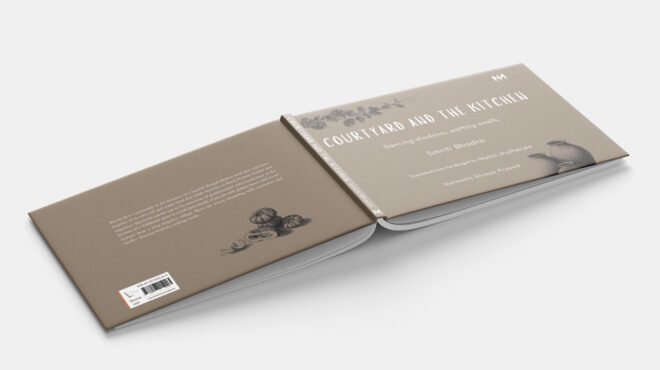
A nostalgic journey into a traditional Bengal kitchen, where family, village life, and heirloom recipes weave stories of memory, heritage, and home.
In stock
| Author(s) | |
|---|---|
| Translator(s) | |
| Illustrator(s) | |
| Language | |
| Format | |
| Pages | 145 |
| ISBN | 978-8197152269 |
“The smudged yard where the holy basil used to be, the prayers of dew-drenched Shiulis with their safron stalks; days delicate as the tagar buds, the dawns reclusive like white Kanchans”- Amidst this, wafted the smells of meals prepared with love, care and wisdom. This book reaches out to those memories of grandmother’s nifty hands busy in the kitchen, of a childhood breathing easy under the warm wings of a together family- ekannavarti, of the people with golden hearts and secret receipes from a long forgotten villiage– it’s rivers, orchards and backyard gardens-all that wonderous little things that nourishes life, makes a home. This book is a testimony to the treasures of a humble Bengal kitchen-foods that celebrates bounties of its own soil and water, food that hold histories of flood, festival, famine and migration. These are stories brimming with memories and smells dancing shadows, wafting smells.


Smriti Bhadra was born in 1981, in Sirajganj (Bangladesh). She holds an MA in Philosophy from Rajshahi University. Currently,
she works for the New York Board of Education. Her first published book Alokpurir Dak received a prestigious award from the
Pencil Foundation. She has published three anthologies of short stories along with the food memoir titled Roshui Ghorer Royak.
The book has been widely acclaimed and adored by readers and critics alike due to its ability to capture the culture of the bygone
Dr. Malini Mukherjee is an Associate Professor in the Department of English, Shri Shikshayatan College, Kolkata since 1999
till date. She did her Graduation, Masters, M.Phil and Ph.D. in English Literature from Jadavpur University. A passionate
translator, she has done translation works for Sahitya Akademi. Her other interests are music, classical dance and books
Shreya Prasad is a self-taught illustrator, graphic designer and fantasy fanatic. When she’s not covered in paints and charcoals,
she can be found desperately trying to complete her PhD thesis on Indian Fantasy
Sorry, no reviews match your current selections
 Courtyard And The Kitchen by Smriti Bhadra
Share this product with others
Poems from Erri De Luca’s Solo Andata, reflecting ...



In the heart of Bengali culture and literature, lies the indomitable presence of a home. Although similar in surface estimation, bari and its brethren, basha is distinct in their purpose. While the basha, signifies a space of mere lodging, the bari encapsulates more. The “loving-kindness” of the homestead, as Smriti Bhadra, translated by Shreya Prasad puts it, in the Courtyard and the Kitchen, is exemplified in the same. Through the retrospective narrative of a then six-year-old
child, the reader is acquainted with the tender realities of the Bengali culture in general and the ekannavarti family (joint family) in particular.
The young narrator, begins by dating her experiences as being from the past, from her younger days. Although the narrative is written in retrospect, a distinct usage of mostly simple present tense, makes the revivification of it seems like an act of active remembering. Thus, having a more consuming impact on the reader. The narrator, Moni’s experiences in the village surrounded by her family and friends, reveal realities of Bengali culture, food, festivals and so forth.
The narrative faithfully records the intricate details, that go into cooking in a Bengali household. The bringing of groceries, chopping of vegetables, tempering of spices, to the act of eating and savoring the dishes is depicted. Perhaps, because of the tender relationship between Moni and
her grandmother, the otherwise mundane task of cooking, for a joint family is represented as an enigma. The process has been mystified in her childish perception, adding to the whimsicality of the text. Til Kumro, Chital Mach, Chaley-Daley, transcends beyond the pages and defines a home for not only Moni, but also the readers.
The idea of love and belonging is intrinsically related to the idea of feeding. However, this idea, does not stay limited to the borders of home. “Boundary walls did not exist in our world.” Be it the anticipated pulao from Golenur Dadi or lozenges from Shankar Jyatha, the tradition of love and food, defied the bounds of religion and class. Thus, Moni is able to place the Hindu dessert of Chandrapuli in the context of the moon of
Eid.
The endearing relationship dynamics of the young narrator renders the book the quality of warmth and comfort. They prove that the home is not just a space enclosed by four walls, but a symposium of caresses and smells. Be it the post-lunch siesta against “Thakuma’s soft, cold belly”, or the smell of her “Hakimpuri zarda” that lulled her to sleep; they all concur to create a pastoral reality, that the reader is invited to inhabit into. Even the “sound of the ceiling fan overhead”, adds to the paradisical ambience of the homestead.
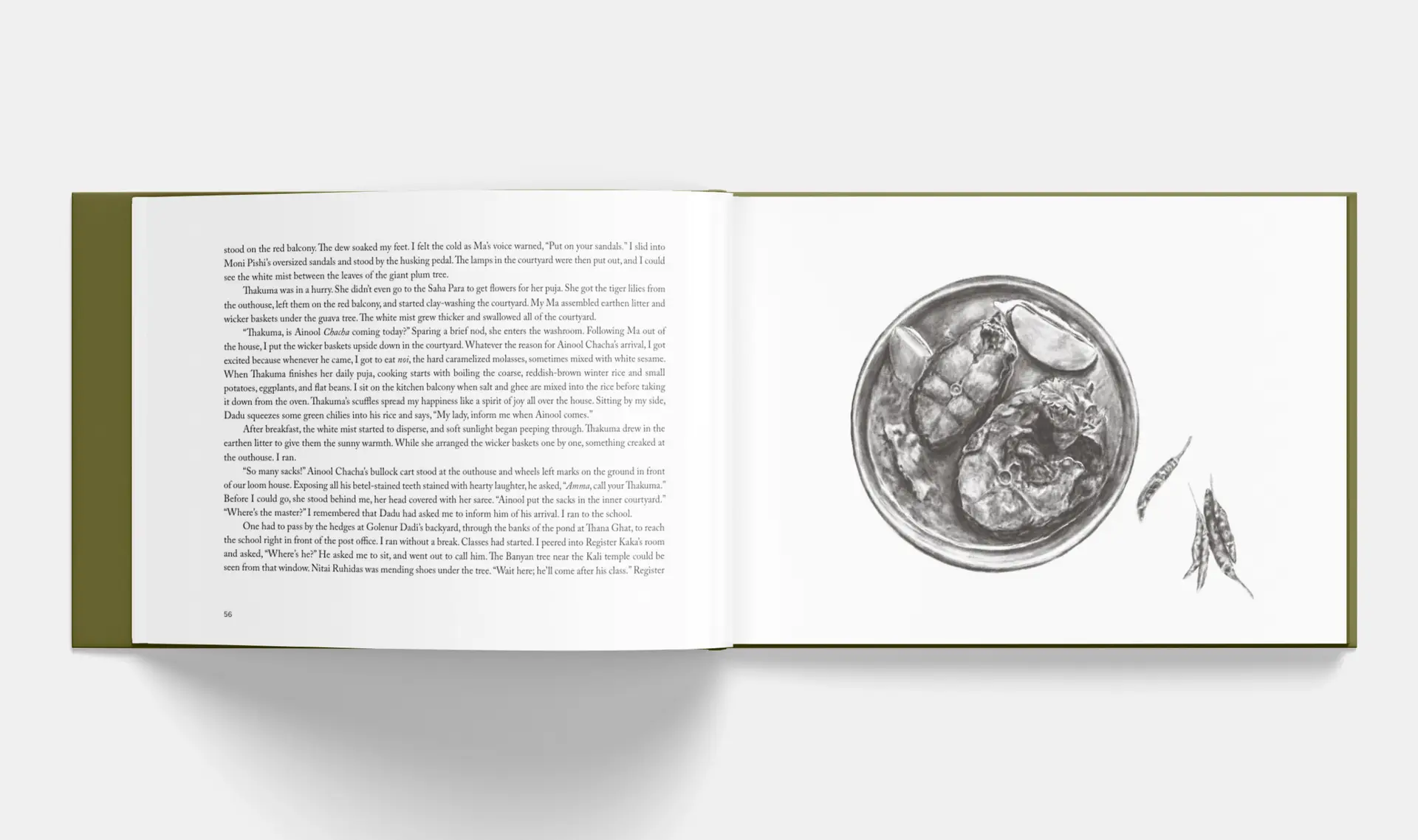
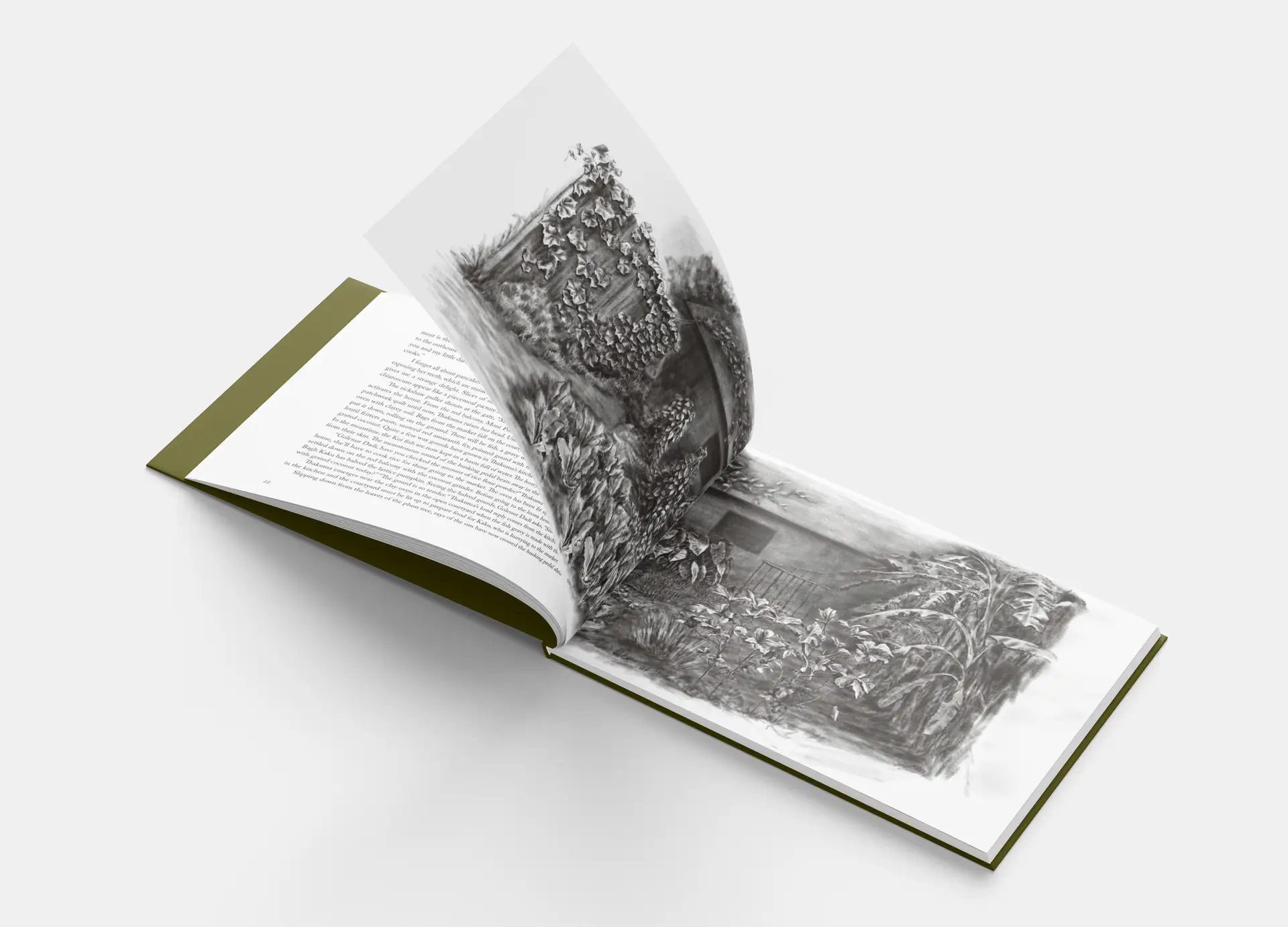
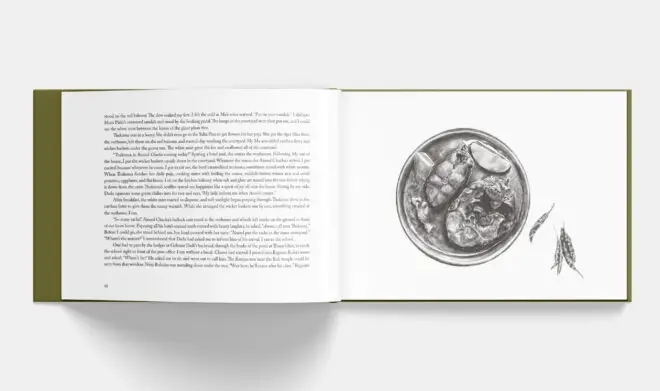
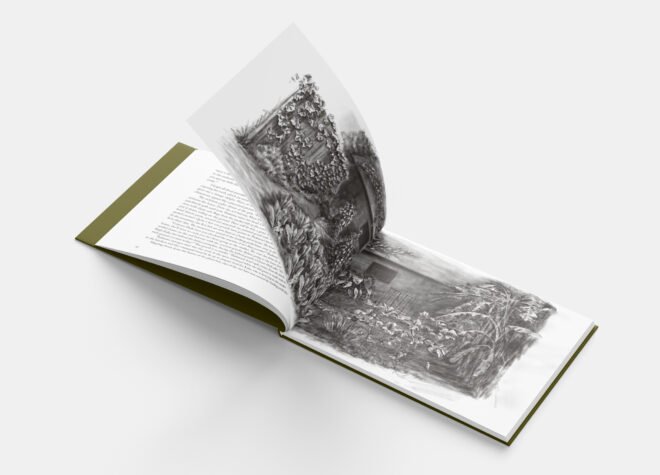
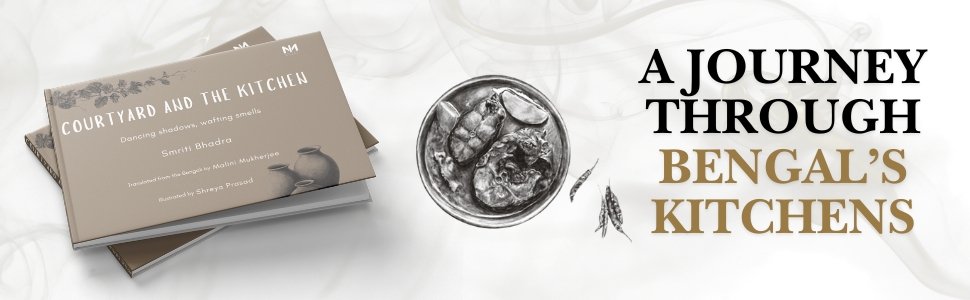
Despite its simple language and diction, the book deftly projects the serenity of the village life experienced on the readers. Amidst the static of the radio, the humdrum of the household, a realm of belonging is created, that does not fail to include its readers. The intricate illustrations that appear throughout the book, further add to the stimulating experience.