No products in the cart.
Return To Shop

No products in the cart.
Return To Shop
No products in the cart.
Return To Shop
Bridge to Global Literature
No products in the cart.
Return To Shop
Bridge to Global Literature
No products in the cart.
Return To Shop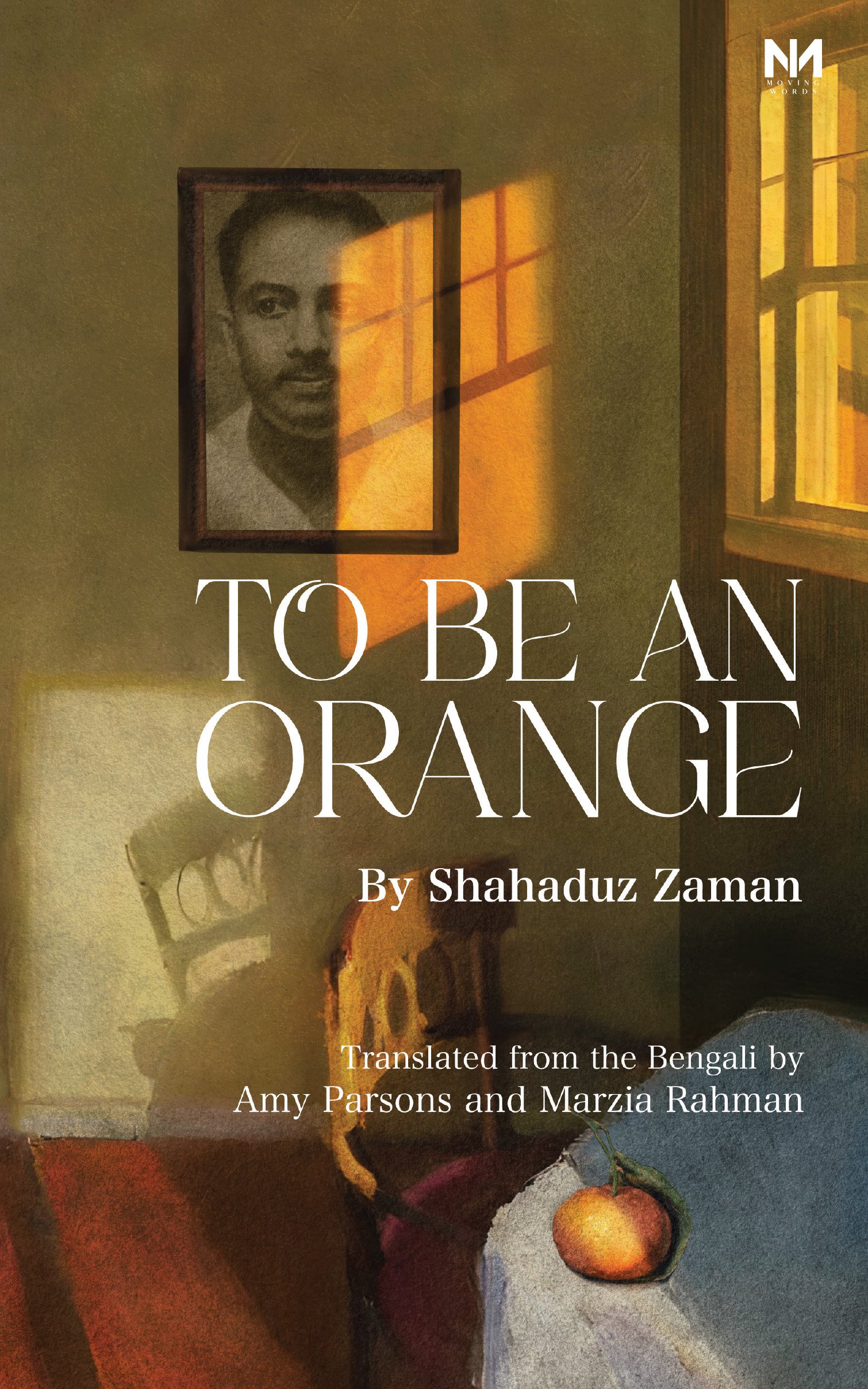
₹700.00
To Be an Orange, Shahaduz Zaman’s acclaimed docufiction on the life of poet Jibanananda Das, now in English translation from the Bengali Ekjon Komolalebu.
In stock
| Author(s) | |
|---|---|
| Translator(s) | |
| Cover Designer(s) | |
| Format | |
| Language | |
| Pages | 440 |
| ISBN | 9789347783142 |
To Be an Orange
Shahaduz Zaman | Translated from the Bengali by Amy Irving Parsons
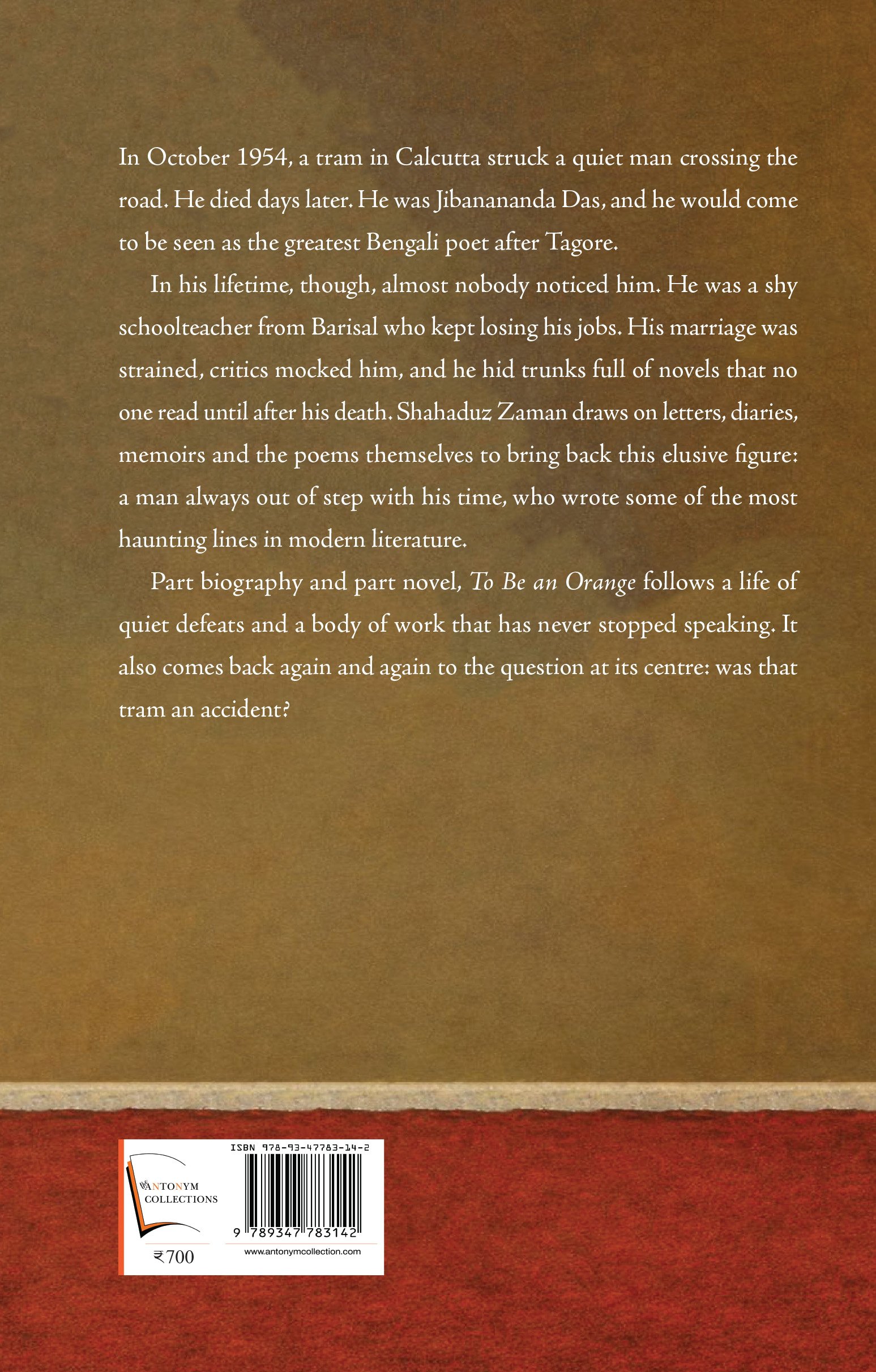
On an afternoon in 1954, a tram hits a man on Rashbehari Avenue in Kolkata. Days later he dies in a hospital ward. The man is Jibanananda Das, now regarded as one of the greatest poets of the Bengali language. He is probably the only person ever killed by a Kolkata tram. Was it an accident, a suicide or something darker?
From that opening, Shahaduz Zaman’s To Be an Orange (Ekjon Komolalebu) goes back to the start of the poet’s life. It begins in a house among lychee and jackfruit trees in Barisal and follows him through decades of struggle, love, failure and quiet genius. In the original Bengali the book had an unprecedented print run. Zaman calls it “docufiction,” and it is anchored in written testimony: letters, contemporary accounts and Jibanananda’s own diaries, many of them published here for the first time. He kept those diaries partly in English, and they appear exactly as he wrote them, raw and unguarded.
What emerges is a radically human portrait. This is the poet behind Bodh and Banalata Sen, but also a man who spent much of his fifty-five years in grinding poverty. He worked as an English teacher, his life was overturned again and again by personal crises and by the upheavals of his time, and he never lived to see his own success. Zaman doesn’t look away from his shortcomings, his selfishness or his catastrophic decisions. He also brings to life a restless, brilliant mind, steeped in science, philosophy, history and astronomy and keenly alive to the modern world.
The book mixes close narration, literary analysis and generous selections of Jibanananda’s poetry and prose. Poems are rendered by distinguished translators including Fakrul Alam, Joe Winter and Rakibul Hasan, and a glossary and bibliography are included. It works as a biography, a novel and a love letter to Bengali literature all at once.
For readers of literary biography, world literature in translation and modern poetry, and for anyone who has felt the pull of Jibanananda’s Bengal.
Shahaduz Zaman has published more than 30 books in Bengali across genres, including short stories, novels, travelogues, and essays. He was awarded the Bangla Academy Literary Award in 2016 in the fiction category, which is Bangladesh’s highest national literary honor. His historical docufiction, Kracher Colonel, has become a national bestseller. Several of his works have been adapted into films and stage dramas. One of his notable projects, the film Komola Rocket, which he scripted, has won several national and international awards and is available on Netflix. Additionally, his biopic novel based on the renowned Bengali poet Jibanananda Das, titled Ekjon Komolalebu, has been adapted for a theater production and performed in London.
Amy Parsons is a UK-based literary translator and teacher of Bengali at the Language Center, SOAS University of London. Experienced across a range of translation practices, including theater, memoir, and academic writing, she honed her craft at SOAS, where she holds an MA in Bengali Language and Culture. Amy’s expertise includes the short fiction of ‘Banaphool’ (Balai Chand Mukhopadhyay), narratives of the Bangladesh War of Liberation, and relations between Bengali and Portuguese; beyond Bengal, she has a keen interest in the Lusophone world and enjoys dabbling in translating European Portuguese. She resides in Reading, England, with her partner and two sons.
Marzia Rahman is a Bangladeshi fiction writer and translator. Author of three books, Dot and Other Flashes, The Aftermath, and The Town Where No One Has Ever Seen a Murder, her flashes and translations have been widely published in both print and online journals. Her novellas-in-flashes Life on the Edges and If Dreams had wings and Houses were Built on Clouds were long listed in the Bath Novella-in-Flash Award Competition in 2018 and 2022. She has received a nomination for Best Microfiction 2023 and a Pushcart Prize Nomination in 2025. Her translated work, The Aftermath, won her the Panjeree-BTF Translation Award in 2023. She has co-edited the flash fiction anthology Flashlights and Atith Theke Adhuna (a compilation of biographies of 65 women writers from Bengal/Bangladesh).
 To be an Orange by Shahaduz Zaman
Share this product with others


Reviews
There are no reviews yet