et-loader
(7 customer reviews)

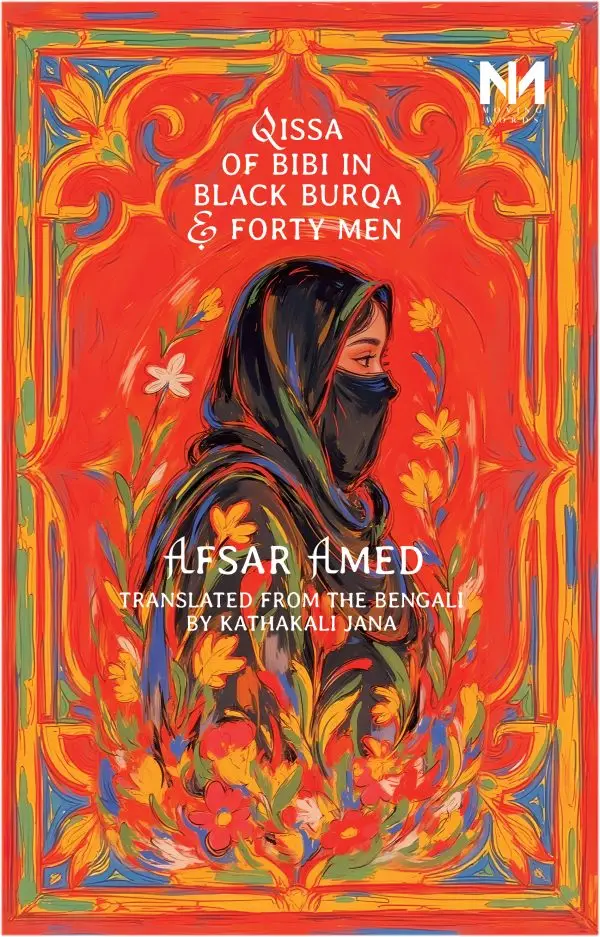
Qissa of Bibi in Black Burqa and Forty Men

425.00

15 people are viewing this product right now

A Poetic Journey of Memory, Womanhood, and Mystical Resistance.

ebook available here Click Here


In stock

Categories: , Brand: Tag:
Estimated delivery:February 18, 2026 - February 20, 2026
Author

Translator

Language

English

Format

Hardback

Pages

184

ISBN-13

9788198441393

Longlisted for the 2025 Atta Galatta Bangalore Literature Festival Book Prize (Fiction)

For readers of Arundhati Roy’s The God of Small Things and Elif Shafak’s The Forty Rules of Love comes a bold and poetic exploration of memory, womanhood, and inner transformation.
This Indian magical realism novel blends fiction of mystical resistance with lyrical prose, offering a rare journey through the symbolic and emotional.

Bibi walks cloaked not just in a black burqa, but in veils of emotion, silence, and stories untold.
Her path intersects with forty archetypal male figures—each representing love, power, longing, trauma, and healing. What unfolds is a collection of South Asian literary fiction that is deeply introspective, stylistically experimental, and emotionally rich.

Rooted in the cadence of traditional qissas, the narrative moves with a quiet rhythm, evoking dreamlike transitions where past and present blend.
As Bibi navigates inner landscapes filled with memory and myth, the book reflects on what it means to be a woman in a world of watching eyes, quiet resistance, and buried truths.

This feminist literary fiction is not just symbolic—it’s alive with metaphors drawn from South Asian traditions and psychological fiction by Indian authors.
Written in poetic, luminous language, Qissa of Bibi in Black Burqa and Forty Men belongs on the shelves of readers seeking books about inner journeys, strong female characters, and magical realism fiction rooted in cultural identity.


Read a review by The Sunday Statesman: Click here

Read a review by The Statesman: Click here

About the Author

Afsar Ahmed, 5 April 1959 – 4 August 2018 was an Indian Bengali writer. His literary career started with writing poetry, soon to change course into prose. His work Bangali Musalmaner Biyer Gan was published in Porichoy in 1978.His first novel Ghor Gerostiwas published in 1980. His writings garnered the attention and wide accolades from Bengali literary circle. His works were published regularly in Porichoy, Kalantor, Baromas, Saroswato magazines. Besides writing he also worked in literary magazine Protikshon for some years. He worked in Paschimbanga Bangla Akademi too. Amed’s book Bibir Mithya Talaq O Talaqer Bibi Ebong Holud Pakhir Kissa was in the school curriculum in Assam. Mrinal Sen directed Aamar Bhuban was based on his novel Dhan Jyotsna. He was the recipient of numerous honours and awards including Somen Chanda Puraskar from Paschimbanga Bangla Akademi in 1998. He and Kalim Hazique translated Abdus Samad’s Urdu novel Do Gaz Zamin into Bengali titled Sare Tin Hat Bhumi. He was awarded Sahitya Akademi Translation Prize for this work in 2000. He also received Bankim Puraskar in 2009. He received Sahitya Akademi Award in 2017 for his novel Sei Nikhoj Manushta

About The Translator

Kathakali Jana is the head of administration and events at the ITC Sangeet Research Academy in Kolkata. She also writes about the Arts in various mainstream and niche publications and engages with performing arts practitioners across genres. She wears yet another hat as a literary translator.

4.71

Based on 7 reviews
5
2
0
0
0

7 reviews for Qissa of Bibi in Black Burqa and Forty Men

  1. Palak

    Kissa of Bibi in Black Burqa and Forty Men has been translated from Bengali by Kathakali Jana. So, this incredible narrative delves into numerous themes and allows the readers to dive into the story of a woman, Rehana, who tends to navigate the complexities of social expectations. We witness how in the flames of love and madness towards the center of the story, her tumultuous life is woven into context as she marries a madman, Kalam.
    We also witness her other entanglements with various men, especially a younger neighbour, Badiur. When we delve into the story, we witness a few points, such as marriage dynamics; we look at the fact that Rehana experiences reality, unfiltered experiences with her husband, and unlike her previous abusive marriages, her relationship with Kalam is different due to his madness, and it happens to be a positive point for Rehana as it offers her a sense of freedom. She finds joy in the peculiar situations which are often revealed in her husband’s obliviousness to her flirtations with other men, which in the eyes of society is not considered rightful. Next, we can talk about social commentary. We witness that the story touches all the societal norms and expectations that are often imposed on women, particularly through the symbolism of the black burqa. The black burqa in the story signifies oppression and is often taken as a symbol which tends to highlight the cloak of anonymity which eventually allows Rehana to exert her agency due to the revolving circumstances. The black burqa is a very important tool for shaping the story, as it enables Rehana to navigate public spaces without getting caught; it also allows her to engage in romantic escapades, which never come into direct reproach, as the burqa acts as a cover and conceals her identity with what she portrays to the society. Next we can talk about attraction and desire, wherein we see that Rehana’s life gets complicated due to attraction, and she eventually delves into it. We see how the attraction she seeks from other men, which is indeed drawn by her beauty and Florent fragrances, complicates her life. The narrative eventually highlights how men like Javed become infatuated with her, which eventually leads to chaos and confrontation among those people who actually exert ownership over her. The next rising point we can talk about is freedom and subjugation. We see as Rehana revels in her secret flirtations, which are indeed playful interactions with Badiur, her feelings oscillate between being joyous and being sad. The burqa, which was earlier a symbol of concealment, becomes a symbol of constraints and freedom along with liberation. Rehana’s internal struggles are what highlight the complexities of female desire in a patriarchal frame, so Qisa of Bibi in a Black Burqa is a rich exploration of women’s quest for identity, how society perceives them, societal norms, societal constraints, autonomy and her own tumultuous relationships, along with a constant struggle for finding her own identity. The story poses a critical question about freedom for all the readers, as in what masks people wear these days to navigate real life, so we see that when we follow Rehana’s life, she is a woman draped in a black burqa who wants to navigate social norms and limitations of society, environment and particularly her relations with other men, yet she finds herself the centre of attention among several men in the market because they are drawn to her due to her beauty, charm and fragrance and despite the restrictions which are imposed on women these days.When we talk about Rehana’s secret life, we come to a conclusion that under the burqa, Rehana enjoys the freedom to live her life without social expectations, norms, and flirts without the fear of judgment as her identity is concealed. She eventually develops a connection with young Maulvi Zakir. Although societal pressures persist, she relishes the attention that she receives from various men as it reflects her desire for fulfilment in both romantic and emotional terms. The burqa and perception play the most important role in the story, as it acts as a sword for Rehana wherein she serves both as a shield and as a medium of individuality to embrace herself without direct confrontation. As the burqa conceals her, she also takes advantage of it to navigate public spaces with allowed freedom, which eventually turns heads around and fuels men’s fantasies about her. Although, when we talk about cultural tensions, we see that the presence of men who tend to follow her creates tension in Rehana’s married life with Kalam, her husband, within the community because Kalam’s insecurity about his wife increases when he realises the depth of attraction she elicits for other people, especially Zakir, who becomes infatuated with her. As we look at the consequences of desire, we see that Zakir’s feelings grow more and more, and the societal implications of his affection bring out a lot of trouble in their life. The community discuss their inappropriate behaviours, highlight moral dilemmas, and critique them, and also the expectations of a Maulvi are questioned. We look at the scene and dive into public humiliation and social commentary next, wherein we notice that the narrative talks about the culmination of a public trial of sorts when Kalam is supposed to find a flower that will enhance Rehana’s illusion. This particular event becomes a metaphor for obsession and unveils their relationship. The climax throws light on the tension between respect and desire, which leads to a humorous and tragic outcome because the community witnesses a love story which is decorated with societal commentary. Societal commentary plays an important role here because the perceptions, illusions, thoughts and the narrative are affected a lot by it .So, in this narrative, we follow the story of Rehana, wrapped not only in a black burqa, but also in societal norms. When we look at it through the lens of patriarchy, we realize that it symbolizes the challenges that women often face in their lives. We look at the expectations of love and rejection here. Following the story, we find that when the village chief insists that she can love young Maulvi, Rehana stands up and questions the notion because she feels concerned by societal norms. So, societal norms have always played a role in framing the mindset of a person. We later see that she pretends to accept his love despite the rejection of her own heart. The narrative is sort of a puppet show wherein Rehana, as a woman, acts as if she loves young Maulvi. Although the narrative depicts her as a woman who enjoys freedom, that comes with being in love, we see that her feelings are complicated. She understands the fact that if she shows her true rejection, it could lead to severe consequences and utmost despair in the life of the Maulvi, which might potentially even cause him to harm himself and in the end Rehana would be the one who would be blamed and at fault. Towards the end, we witness how Rehana skillfully balances her facade of affection and her true feelings wherein she is also found masking the rejection as she navigates through village life. We also see how her interactions are charming yet filled with powerful tension as she is supposed to manipulate the expectations. So we see how the story depicts societal pressures, expectations, and norms, whereas women often wear a mask as a result of subjugation. Rehana’s life has always been complicated, and the portrayal of dance between love and rejection depicts the change in her life when she is in a personal conflict with the truth. So, this is an amazing narrative which delves into numerous themes and allows the readers to witness a woman, Rehana, who tends to navigate the complexities of social expectations. We witness that in the flames of love and madness towards the center of the story, her life is tumultuous and is woven into context as she marries a madman, Kalam, her spouse.

    Is it helpful?
  2. Manya wadhwa

    This book has to be one of my best reads ever till this day. I did not expect to enjoy it as much as I did. Also there will be no spoilers but we’ll keep this review detailed. Genuinely cannot express how much I enjoyed the writing, considering i am someone who rarely reads anything which isn’t fiction or fantasy like I don’t usually read this type of novels.
    The first thing, this novel GRIPPED ME the moment I started, it has a DAMN STRONG hook, I couldn’t put it out until I finished it all. Second of all which I really really liked is the fact that the language of the book is VERY SIMPLE. I liked it because it doens’t make reading a chore, like you don’t have to constantly check the meaning of words you don’t understand. Another thing I loved was definitely the PLOT, The plot was something I did not expect, it was not at all too fast or too slow, it wasn’t too descriptive or too dialogue focused it was just PERFECT. I am SURE YOU WILL ENJOY IT A LOT.

    Is it helpful?
  3. Rira

    A book rooted in magic realism that incorporates Bengali literature, regional landscape, mythology along with Hindi and Islamic traditions. The author follows the South Asian type of storytelling called ‘qissa’. The novels MC, Bibi is a woman who has claimed herself for the first time in her life when she is married off to a madman in her third marriage. Dealing with forty archetype of men, Bibi observed and plots from behind the veil of the burqa. The very symbol of control becomes her vantage point in her life.
    The book is translated from the author’s original work in Bengali named as ‘Kalo Borkhar Bibi o Kusumer Gondho Ebong Chollishjon Lok’. Kathakali Jana has masterfully translated maintaining cultural and linguistic reverence. Magical realism, feminist fiction and social injustice towards women have intertwined into a beautiful story in this work.

    Is it helpful?
  4. Ranadip Roy Chowdhury

    This was the first time I read one of the works of Afsar Ahmed. I liked the writing style. It was quite easy and engaging. The chapters are of moderate length.

    The story revolves around Rehana, who has been recently married to her third husband, Kalam. After the marriage, she gets to know the secret that her in-laws kept from her and her family. Her husband is a madman.

    After two failed marriages, Rehana’s expectations were not high. Because he is insane, her husband allows her to be free of the constraints of being an obedient housewife.

    However, things do not remain this easy for long. After some time, her husband appears to be cured. And now he makes his wife to wear a burqa whenever she leaves the house.

    Amid all, Rehana finds her own happiness. She is completely alone underneath the black cover. She enters another world where no one knows who she is.

    The story addresses a variety of social issues, including extramarital love and patriarchy.
    The story also demonstrates how society treats women as if they are objects to be possessed rather than people.

    The story leaves us with some questions about our society. It causes us to reconsider our definitions of freedom, love, sanity, and most importantly, the free will of women tied by the bonds of sacred marriage.

    I would recommend this book to anyone who enjoys reading literary fiction.
    4 stars 🌟

    Is it helpful?
  5. Rira

    A book rooted in magic realism that incorporates Bengali literature, regional landscape, mythology along with Hindi and Islamic traditions. The author follows the South Asian type of storytelling called ‘qissa’. The novels MC, Bibi is a woman who has claimed herself for the first time in her life when she is married off to a madman in her third marriage. Dealing with forty archetype of men, Bibi observed and plots from behind the veil of the burqa. The very symbol of control becomes her vantage point in her life.
    The book is translated from the author’s original work in Bengali named as ‘Kalo Borkhar Bibi o Kusumer Gondho Ebong Chollishjon Lok’. Kathakali Jana has masterfully translated maintaining cultural and linguistic reverence. Magic realism, feminist fiction and social injustice towards women have intertwined into a beautiful story in this work.

    Is it helpful?
  6. Annesha Paul

    “Qissa of Bibi in Black Burqa and Forty Men” is a translated work of Afsar Ahmed who probes the picture of rigid structure of identity and gender scenery where Rehana, the protagonist as a bibi explores her hidden burial of desires under the attire of Burqa out of pain and atrocities she endures in her marraige.

    The story of Rehana is something I find uncanny who discovers freedom in her third marriage with a lunatic husband after first two marriages which did not last long, due to the abusive nature of husbands. Finding solace and savoring pleasure of having married a madman, she starts to like her marriage. But her freedom serves as a matter of fleeting hug to heaven while alive.

    The fragrance of flower determine the main twist in the story which portrays the woman’s struggle to follow their own norms and the sexual assault faced by a woman in the house of in-laws.

    The portrayal of forty men serves not just as a congest of mere characters but as a metaphor for the collective weight of male authority in the patriarchal society that defines and confines her existence. Afsar Ahmed through the context of a pervasive cultural machinery crafts the narration with playful tone to capture the suppressed voices.

    Apart from that, this book speaks more of an uncomfortable truths of a traditional culture. The elements of hypocracy, misogyny, religious conservatism, and societal complicity have been denoted throughout the waves of the life of Rehana. There are some parts which is not easy for me to engulf since the constant haunting and unsettling dilemmas distracted my mind to take this as a fictional story.

    Is it helpful?
  7. sukaina majeed

    oohhh…this is one fine agency given to a burqa clad woman and how a flower and later on the incidents regarding the flower and of Rehana’s husband is a treat to read. A woman makes her burqa her weapon. not to harm but so much more. don’t miss out on this book.

    Is it helpful?
Add a review

Your email address will not be published. Required fields are marked

You have to be logged in to be able to add photos to your review.

Share this product with others

Facebook
WhatsApp
X

You May Also Like